Frequently Asked Questions
The most-asked questions about taxonomy & evolution.
What exactly is taxonomy?
Taxonomy is the science of naming, describing, and organizing living organisms into a nested hierarchy of categories. It gives scientists a shared vocabulary so that a species in Tokyo and a species in Nairobi can be referred to by the same unambiguous name.
What is evolutionary biology in plain terms?
Evolutionary biology investigates how the diversity of life originated and changed over time through mechanisms such as natural selection, genetic drift, and mutation. It explains why distantly related organisms share structural similarities and how new species arise from common ancestors.
Who are the foundational figures in taxonomy?
Carl Linnaeus codified binomial nomenclature and the rank-based hierarchy in the 1700s, building on earlier work by John Ray and Gaspard Bauhin. In the modern era, Carl Woese's 1977 ribosomal-RNA analysis split prokaryotes into Bacteria and Archaea, reshaping the entire tree of life.
Who are the key figures in evolutionary theory?
Charles Darwin and Alfred Russel Wallace independently articulated natural selection in the 1850s, forming the engine of modern evolutionary thought. The 1930s–40s Modern Synthesis wove Mendelian genetics into that framework, and Lynn Margulis's endosymbiotic hypothesis later explained how complex eukaryotic cells assembled from simpler ones.
Where should a complete beginner start?
A solid path is to work through an introductory biology textbook's chapters on cells, genetics, and ecology before tackling a dedicated evolution or systematics course. Popular-science titles like Dawkins' *The Ancestor's Tale* or Futuyma's *Evolution* serve as accessible bridges into the primary literature.
What are the main taxonomic ranks from broadest to most specific?
The classic ladder runs Domain → Kingdom → Phylum → Class → Order → Family → Genus → Species. In practice, dozens of intermediate ranks (subphylum, superfamily, tribe, etc.) are inserted as needed, and modern phylogenetics treats the rigid ladder as a useful but imperfect scaffold.
How does taxonomy differ from systematics?
Taxonomy centers on the act of naming and classifying organisms, whereas systematics is the broader investigation of their evolutionary relationships and the patterns of biodiversity. The two overlap heavily in daily usage, but systematics explicitly aims to reconstruct phylogenies while taxonomy can remain more descriptive.
What are the three domains of life?
Bacteria, Archaea, and Eukarya represent the deepest recognized split in the tree of life, a division Woese proposed in 1977 based on 16S rRNA sequence differences. Bacteria and Archaea are both prokaryotic yet differ in membrane chemistry and transcription machinery, while Eukarya encompass every organism with a membrane-bound nucleus.
What is a landmark moment that reshaped the field?
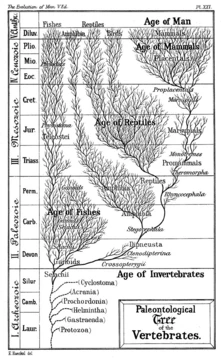
The 1859 publication of Darwin's *On the Origin of Species* unified scattered observations into a single mechanistic explanation for biological change. More recently, high-throughput genomic sequencing and phylogenomic analyses have repeatedly redrawn the tree of life, splitting or merging groups that had been stable for decades.
Is the tree of life still being revised?
Yes—environmental DNA sampling, single-cell genomics, and large-scale phylogenomic studies continue to uncover previously unknown lineages and reassign long-standing placements. Questions about the last universal common ancestor and the placement of deep-branching microbial phyla remain genuinely open research frontiers.